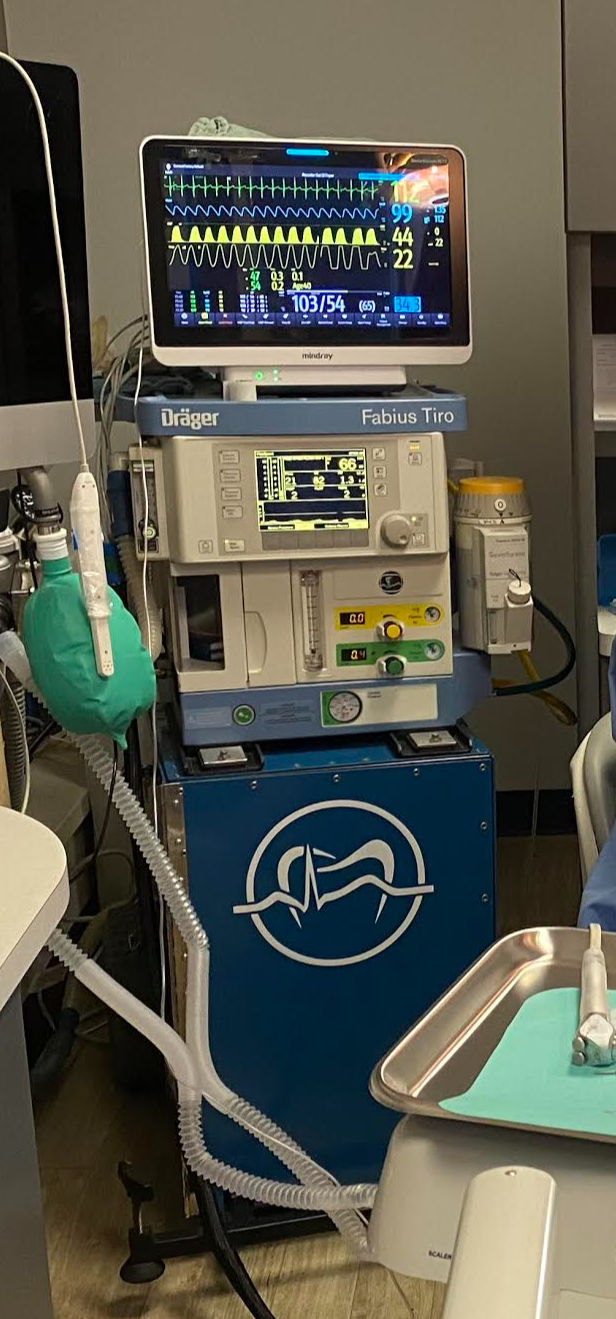
Why Our Practice Uses the Dräger Fabius Tiro M: A Higher Standard in Dental Anesthesia DeliveryIn office-based dental anesthesia
%20(2).jpg/v1/fill/w_320,h_320/file.jpg)
The anesthesia machine is not just another piece of equipment — it is a critical life-support platform. While many systems can technically deliver anesthetic gases, not all anesthesia workstations are engineered to the same clinical standard.
At McCarty Anesthesiology, we utilize the Dräger Fabius Tiro M anesthesia workstation because we believe patient safety, ventilatory precision, monitoring integration, and reliability should meet the same standards expected in hospital operating rooms — not merely the minimum required for office sedation.
By comparison, other portable anesthesia machines were designed primarily around portability and compactness rather than comprehensive anesthesia workstation performance. That distinction matters.
The Difference Between a Portable Anesthesia Unit and a True Anesthesia Workstation
Most portable anesthesia systems intended for office-based and mobile environments emphasize compact size, portability, and basic three-gas delivery capability.
The Dräger Tiro M, on the other hand, is derived from Dräger’s hospital-grade Fabius platform — a lineage widely recognized in operating rooms worldwide for sophisticated ventilation capability, low-flow anesthesia performance, and advanced safety engineering.
Clinicians frequently describe modern Dräger systems as the industry standard for anesthesia workstations. That difference in design philosophy translates into meaningful clinical advantages for patients.
Superior Ventilation Capability
One of the most important distinctions is ventilation technology.
Most portable systems like the VSO2 are fundamentally gas-delivery platforms with optional ventilator add-ons. They are appropriate for simpler sedation environments but do not provide the same depth of ventilatory sophistication found in a true anesthesia workstation.
The Dräger Tiro M incorporates ventilator technology derived from hospital operating room systems, allowing for:
More precise tidal volume delivery
Better compensation for leaks and compliance changes
Advanced pressure-control ventilation capability
Improved support during deeper levels of anesthesia
More stable ventilation during longer or more complex procedures
In dental anesthesia, especially during deep sedation or general anesthesia, respiratory stability is everything. Small improvements in ventilatory precision can materially improve patient safety margins.
Better Low-Flow Anesthesia Performance
Low-flow anesthesia is not simply about efficiency — it reflects how refined and responsive an anesthesia workstation truly is.
The DRE VSO2 is described as “designed to accommodate low flow.”
Dräger systems, however, have long been recognized for exceptional low-flow anesthesia capability and breathing system efficiency. Many anesthesia professionals specifically cite Dräger machines for their stability during low-flow delivery.
Benefits of advanced low-flow anesthesia include:
More stable anesthetic concentrations
Reduced fresh gas waste
Better humidity and heat preservation in the breathing circuit
More controlled anesthetic delivery
Faster recognition of physiologic changes
These are characteristics associated with modern hospital-grade anesthesia care.
Integrated Safety Engineering
Most systems incorporate baseline safety features such as hypoxic guard mechanisms.
However, the Dräger platform is built around a much broader anesthesia safety architecture that includes:
Sophisticated ventilator monitoring
Integrated alarm management
Advanced airway pressure monitoring
High-level system self-checks
More comprehensive respiratory mechanics data
Greater redundancy in system design
This distinction is important because anesthesia safety is rarely about one catastrophic event. More often, safety comes from earlier recognition of subtle physiologic changes before they become emergencies.
Higher-end anesthesia workstations are specifically engineered to provide clinicians with more information, earlier warnings, and better control.
Hospital-Level Engineering in an Office Setting
The Dräger Tiro M is a superior design to other portable anesthesia equipment.
It brings hospital-operating-room engineering into smaller procedural environments without sacrificing the core performance characteristics anesthesiologists expect from a full workstation.
That means:
More robust breathing system design
Greater durability under continuous use
More sophisticated ventilation modes
Better integration with physiologic monitoring
Enhanced ergonomics and workflow efficiency
In practical terms, this allows anesthesia providers to deliver care in a dental setting using equipment standards much closer to what patients would encounter in a hospital OR.
Why This Matters for Patients
Most patients will never notice the anesthesia machine in the room — and that is exactly the point.
The best anesthesia systems quietly provide:
Stable ventilation
Predictable anesthetic delivery
Faster detection of problems
Better physiologic monitoring
Greater safety redundancy
When practices invest in higher-end anesthesia workstations, they are investing in layers of protection that patients may never see, but absolutely benefit from.
Our Commitment to a Higher Standard
Dental anesthesia should not be viewed as “less than” hospital anesthesia. The physiologic principles are identical, and patient safety expectations should be equally rigorous.
That is why our practice chooses equipment such as the Dräger Fabius Tiro M rather than relying solely on lightweight portable anesthesia platforms.
For us, the goal is straightforward: bring the highest practical standard of anesthesia delivery into the office-based dental environment so patients receive care with the same emphasis on safety, precision, and reliability expected in modern operating rooms.
Many providers talk about providing a "hospital grade anesthetic in an office environment. McCarty Anesthesiology delivers on that commitment to patient safety.
Comments